Bedding · A practical guide
How to Choose a Coyuchi Duvet Cover for Everyday Use
A duvet cover is one of those quietly hardworking pieces: it protects the insert, shapes the feel of the bed and makes a room look considered with very little effort. Choosing one for everyday use means looking beyond its first impression. Fabric, fit, fastenings and care all matter—especially in a dorm or small bedroom where laundry time, storage and daily routines are real considerations.
Start with the way you want the bed to feel
A duvet cover is the layer closest to your skin, so its texture and temperature are more than finishing touches. A smooth, closely woven cotton may feel crisp or silky depending on its weave; linen tends to have a more relaxed, textured hand. Neither is universally better. The right choice is the one that suits your sleep preferences, your room climate and the amount of texture you enjoy against your skin.
When evaluating Coyuchi duvet covers, begin with the material description rather than the color or styling. Look for the fiber content, weave and any stated finishing details. These clues help you picture how a cover may feel after repeated use, and whether it is likely to suit a room that runs warm, stays cool or changes with the seasons. If a product page describes a fabric as breathable or temperature-regulating, treat that as useful context—not a guarantee that it will feel identical for every sleeper.
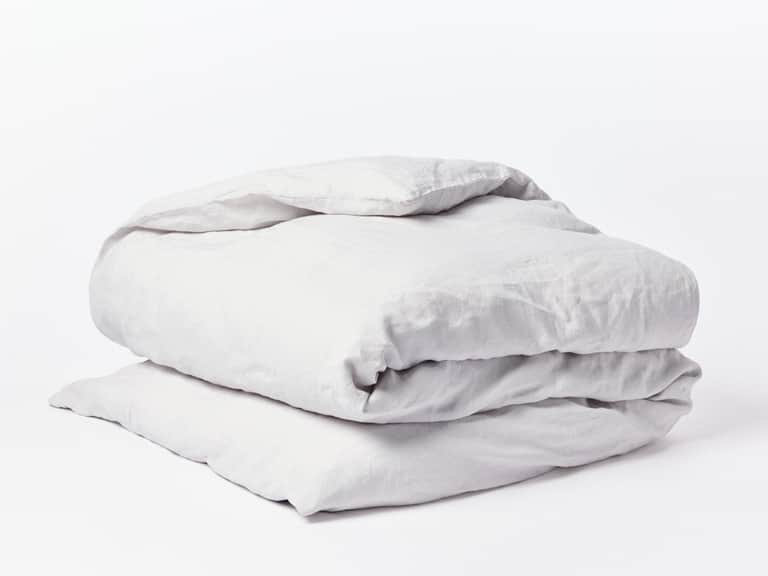
For example, the Coyuchi Organic Relaxed Linen Duvet Cover is made from 100% GOTS-certified organic French linen. Its relaxed texture is designed to soften with use, and linen’s naturally breathable character can make it a comfortable option for people who prefer a less enveloping feel. The cover is described as machine washable, with cold washing on a gentle cycle and low tumble drying recommended. Those practical details belong in the decision alongside the fabric’s look.
In a dorm, tactile preference has a practical side. A cover that feels pleasant when you climb into bed can make a small, multipurpose room feel more restful. At the same time, the fabric should suit the temperatures you actually experience—not simply the atmosphere you want to create. Consider whether your room is heated, air-conditioned, drafty or shared with someone who prefers a different temperature. The duvet insert contributes much of the warmth, but the cover is part of the overall sleep environment.
Understand weave, weight and the language of comfort
Product descriptions often use words such as “soft,” “crisp,” “lightweight” and “relaxed.” They can be helpful, but they are not standardized measurements. Fiber and weave provide firmer clues. Linen is made from flax fibers and typically has a more visible, lived-in texture than tightly woven cotton sateen. Sateen, by contrast, is a cotton weave known for a smoother surface and gentle sheen. Even within one fiber family, finishing and construction can change the final feel.
Thread count is not a universal comfort score, and it is not the main comparison point for linen. For cotton sheets and covers, thread count may offer context, but it should be considered with fiber quality, weave and finishing. For linen, concentrate instead on the stated material, texture, construction and care guidance. A well-described cover offers a clearer basis for choice than a single number or an atmospheric adjective.
Think about how the cover will meet your existing bedding, too. A textured linen cover can bring an easy, unstudied quality to a simple room; a smoother fabric may feel more polished and familiar. If you already use cotton sheets, either contrast or continuity can work. There is no need to make every layer match exactly. A restrained palette and a mix of textures can make a bed feel personal without adding clutter—an advantage when the room has limited space.
For students and other frequent movers, versatility is valuable. Choose a fabric and color you can imagine using across several seasons and in more than one room. A durable everyday cover should be comfortable enough for nightly use, but also practical to wash and store. If you share laundry facilities, check the recommended cycle and drying method before choosing a fabric that needs more attention than your schedule allows.
Measure the insert before you fall for the fabric
Fit is one of the most important details in a duvet cover buying guide—and one of the easiest to overlook. A cover should be compatible with the insert’s dimensions. Compare the listed width and length of both pieces rather than relying only on labels such as twin, full, queen or king. Bedding terms can vary between manufacturers and regions, so the actual measurements are the more dependable reference.
A cover that is too small can compress the insert and make the bed feel uneven. One that is substantially too large may allow the fill to drift, leaving empty corners or a rumpled appearance. A close match helps the duvet lie smoothly and makes it easier to arrange in the morning. If you are buying for a residence-hall bed, check the mattress and bedding specifications supplied by the school or housing provider; “twin” and “twin XL” are not interchangeable measurements.
Also consider the insert’s loft. A thick, lofty duvet may occupy more of a cover than a flatter one with the same nominal dimensions. If you are keeping an insert you already own, measure it while it is laid flat and check its care label. If buying both pieces, confirm that the dimensions are compatible before removing packaging or laundering anything. When specifications are unclear, seek clarification from the seller rather than guessing.
The Coyuchi Organic Relaxed Linen Duvet Cover listing provides dimensions by size, including twin, full/queen, king and super king options. Use those specific measurements to compare against your insert and bed. Do not assume that a size name alone settles the question, particularly if your existing duvet comes from a different brand. A few minutes spent measuring can prevent a cover that looks beautiful online from feeling awkward in daily use.
Look closely at ties, buttons and the opening
The inside of a duvet cover is where practical design earns its keep. Interior ties or loops can attach to corresponding points on an insert, helping to limit shifting and bunching. This is especially useful if you move around during sleep or if your duvet is lofty and prone to migrating toward one end. Before choosing a cover, check whether fasteners are included and whether your insert has compatible loops or attachment points.
Closures matter as well. Buttons, zippers and overlapping flaps each create a different experience when making the bed and laundering the cover. Buttons may be simple to fasten and repair, while a zipper can close a longer edge quickly. An interior flap offers an additional layer of enclosure without requiring a visible closure across the full opening. The best option is a matter of preference, but the opening should be easy enough to manage that changing the cover does not become a weekly wrestling match.
The Coyuchi Organic Relaxed Linen Duvet Cover includes an eight-inch interior flap, coconut shell buttons and inside ties. These details are designed to help secure the insert and keep the closure contained. If you choose this style, take a moment to connect the insert to the ties when making the bed; the small step can help the layers stay aligned. If your duvet does not have loops, the cover can still be used, but the interior attachments may not be able to do their intended job.
For dorm life, ease is part of elegance. A fastening system that is straightforward to operate makes routine washing less of a chore. When you compare covers, imagine the entire process: removing the insert, turning the cover right side out, washing it, drying it and putting it back on. A design that looks refined but is difficult to handle may be less satisfying than one that supports the rhythms of everyday living.
Treat care instructions as part of the purchase
A duvet cover protects the insert from everyday dust, body oils and spills, which can reduce how often the insert itself needs cleaning. That protection works best when the cover is washed at a sensible interval and cared for according to its label. Before selecting a fabric, make sure its laundry requirements fit your routine, your available machines and the drying facilities you can use.
For the Coyuchi linen cover described above, the care guidance calls for a cold wash on a gentle cycle with like colors, followed by tumble drying on low. The recommendation is to remove it promptly; a warm iron is optional. Following the specific instructions on the product label is important, since machine settings and care guidance can differ across materials and product versions. Avoid assuming that every linen item can be treated identically.
In shared laundry rooms, a little preparation can help protect bedding. Wash the cover with similar colors, avoid overloading the machine and use detergent according to its directions. If you are unsure about a dryer’s heat, choose the gentlest suitable setting and check the fabric before the cycle finishes. Removing a cover promptly may help reduce creasing. The aim is not to keep bedding pristine at all costs; it is to establish care habits that keep it comfortable and serviceable.
Wash a new cover before first use if its care label allows and you prefer that feel. Afterward, wash as needed rather than on an arbitrary schedule. If a spill occurs, consult the care instructions promptly and avoid applying harsh treatments without checking whether they are suitable. A duvet cover is meant to be used, not preserved as a showroom object. Regular, appropriate laundering is part of its everyday purpose.
Choose a color and texture that work in a small room
In a compact bedroom, bedding occupies a large share of the visual field. A duvet cover can make the room feel calmer, brighter or more grounded without adding furniture. Soft neutrals are versatile and tend to sit easily alongside existing dorm furnishings, while deeper or more saturated colors can make the bed feel intentional. The practical question is whether the shade suits the rest of your room and the way you want the space to feel when you return at the end of the day.
Texture can do the work of pattern. Relaxed linen has a distinct surface that gives a bed character even in a restrained color. If you prefer a more decorative look, patterned or colored bedding can still feel composed when the other layers are simple. Rather than buying a complete matching set, consider how the cover will work with the sheets and pillowcases you already have. A small number of compatible pieces can create a finished look without filling limited storage with duplicates.
Practical details deserve a place in the aesthetic decision. A highly pale cover may show marks more readily, while a very dark fabric can reveal lint depending on its finish. Room lighting also changes color: a shade that appears warm in a product photograph may look cooler in a room with fluorescent lighting. If color accuracy is important, review the product description and return conditions, and remember that screens can render tones differently.
Keep the room’s function in view. A dorm bed may also serve as a reading nook or a place to sit with a laptop, so a cover that is comfortable and easy to tidy can make the whole space feel more usable. A simple duvet fold, a pillow or two and a clear surface nearby are often enough. The point is not to stage the room, but to make its most-used area feel restful and considered.
A considered choice for student bedding
Student bedding has a particular set of demands: limited storage, shared washing facilities, frequent packing and unpacking, and room temperatures that may not be fully under your control. A duvet cover should fit the insert, be manageable to launder and suit the sleep environment. Those practical criteria can coexist with a preference for natural fibers, a tactile fabric or a thoughtfully chosen color.
If sustainability claims are part of your decision, read the certification and material details closely. The Coyuchi Organic Relaxed Linen Duvet Cover is described as GOTS-certified and made from 100% organic French linen, with flax grown in France and the linen woven in Portugal. Certifications and origin information can help explain how a product is made, but they do not replace checking fit, comfort and care. Choose the details that matter to you, and distinguish stated product information from assumptions.
For people moving into a dorm, make a short checklist before ordering: confirm the bed size, measure the duvet insert, review the cover dimensions, verify the closure and attachment system, and check the wash and dry instructions. Ask housing staff about mattress dimensions if they are not provided. If you are shopping with a parent or family member, agree on what is essential—easy care, a particular fabric, a price range or a color that will work in a future apartment—before comparing options.
Everyday bedding is most successful when it supports the habits you already have. If laundry is easy to schedule, you may be comfortable with a fabric that asks for a gentler cycle. If you rely on a busy communal laundry room, simple maintenance may be a priority. If your room is warm, breathable fabric may appeal; if it is cold, the insert and any additional layers will play a larger role in warmth. A cover cannot solve every sleep challenge, but it can make the bed easier to care for and more pleasant to use.
A quick checklist before you decide
- Fabric: Check the fiber content and weave, and decide whether you prefer a smooth, crisp or more textured feel.
- Climate: Consider the room’s usual temperature and how your duvet insert contributes to warmth.
- Dimensions: Compare the cover’s stated measurements with the insert, not just the size label.
- Fastenings: Look for interior ties or loops and check whether they work with your insert.
- Closure: Decide whether buttons, a zipper or an interior flap will be easiest for you to use.
- Care: Make sure the washing and drying instructions suit your available laundry setup.
- Room and routine: Choose a color and texture that feel right in the space and remain practical through regular use.
For a refined linen option with practical everyday details, review the Coyuchi Organic Relaxed Linen Duvet Cover and compare its material, measurements, fastenings and care instructions with your own needs. The most compelling choice is not simply the one that looks beautiful in a photograph. It is the cover that fits the insert, feels inviting night after night and remains straightforward to refresh when life gets busy.