Bedding · Sleep essentials
Pillow Loft Explained: Finding Support for Your Sleep Position
The pillow that looks cloudlike on a shelf may flatten beneath your head; the one that seems modestly plump may hold you at just the right angle. Finding your ideal pillow loft is less about chasing a fashionable profile and more about understanding how height, firmness, fill, and sleep position work together.
In the quietly personal architecture of a bed, a pillow does more than soften the transition between a long day and a good night. Its height influences where your head rests, how your neck is supported, and whether your upper body feels comfortably aligned. That height is known as pillow loft. It can be low, medium, or high, but those labels are only a starting point: a pillow’s apparent height is not always the height it maintains once you settle in.
For anyone comparing pillows, the distinction matters. A lofty pillow can compress into a far lower shape. A firm, contoured design may keep more of its height under pressure. The best choice depends on your sleep position, body shape, mattress, comfort preferences, and the way a particular fill responds over the course of the night. There is no universal “correct” loft—only a more informed way to discover what feels supportive for you.
What pillow loft really means
Loft describes a pillow’s height, especially the height it retains when your head is resting on it. Product descriptions may refer to a low, medium, or high profile, but a measurement taken while a pillow is untouched does not tell the whole story. Your head presses into the filling, and the degree of compression varies by material, construction, and firmness.
Think of loft and firmness as related but separate qualities. Loft is height; firmness is resistance to compression. A pillow can look tall yet feel soft and compress substantially. Another can have a moderate profile and feel comparatively firm, holding your head in a more stable position. A third may have an adjustable fill that lets you alter its height over time.
This is why a quick glance—or a brief squeeze—rarely settles the question. The useful test is how the pillow behaves beneath you in your usual sleeping position. If you can, lie down on it for several minutes. Notice whether your head sinks gradually, remains elevated, or seems to tilt toward the mattress. The pillow’s loaded shape, rather than its showroom silhouette, is what your neck experiences.
Why sleep position changes the equation
Your sleeping position affects the space between your head and the mattress. That space helps determine the amount of pillow height that feels comfortable. A pillow’s job is not to force every sleeper into a single posture; it is to provide a restful, stable landing place that suits the way the body naturally rests.
Side sleeping: consider the shoulder-to-head gap
Side sleepers often need more height than back sleepers because the shoulder creates a wider space between the mattress and the head. A pillow that compresses too much may leave the head lower than the shoulder line; one that is too lofty or rigid may push the head upward. Either mismatch can feel noticeable as pressure or tension around the neck and shoulder.
Body proportions matter. Shoulder width, head size, and the firmness of the mattress all influence how much height feels right. A softer mattress may allow the shoulder to sink more deeply, reducing the gap the pillow needs to bridge. A firmer surface may leave the shoulder higher and call for a different amount of support. Rather than assuming that every side sleeper needs a high-loft pillow, consider how your own body rests on your own mattress.
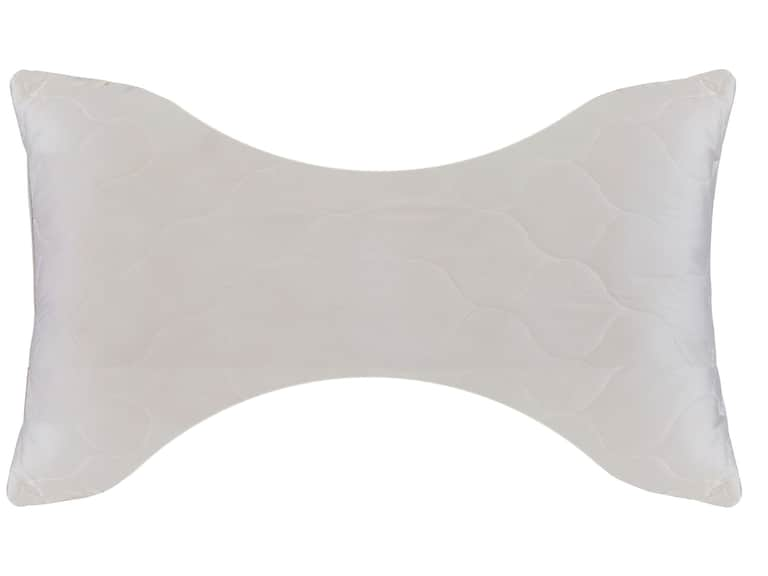
Shape can also play a role. A contoured or shaped pillow may provide a more intentional resting area for the head and a different feel around the shoulder. The Side Dreamer Pillow, for example, is designed with side sleeping in mind: its boomerang shape, firm loft, and contoured ends offer a distinct alternative to a conventional rectangular pillow. Such a design may appeal to someone seeking a more structured feel, though personal comfort and fit remain individual.
Back sleeping: a more measured profile
Back sleepers commonly look for a profile that supports the head without tipping it noticeably forward. If a pillow is too high, it may feel as though the chin is being nudged toward the chest. If it is too low or collapses quickly, the head may feel as though it has little cushioning. A moderate or lower loft can be a useful place to begin, but firmness and compression remain just as important as the stated height.
Consider whether the pillow supports you evenly or creates a distinct mound beneath the head. Some people prefer a gently cradled feeling; others find a flatter, more flexible surface more comfortable. The goal is not to chase a textbook posture in isolation, but to find a position in which your head and neck feel at ease and the pillow does not demand constant adjustment.
Stomach sleeping: avoid unnecessary elevation
Stomach sleepers often find that a low-profile pillow feels less cumbersome than a thick, highly supportive design. Because the head is turned to one side in this position, additional height may feel awkward or create a pronounced angle. Some stomach sleepers prefer a very soft, compressible pillow; others choose to sleep with a minimal pillow or none beneath the head. Individual comfort is the guide.
If you move between positions during the night, a compromise pillow may be more practical than a design optimized for just one posture. Adjustable fill can be useful here: it allows you to experiment with less height or reshape the pillow as your preferences become clearer.
Fill determines how loft behaves
The filling inside a pillow influences its first impression, its resilience, and how much height remains after you lie down. Two pillows with similar measurements can feel very different because their materials compress and recover in different ways. When comparing options, read the construction details as closely as the profile label.
- Down: Soft and airy, down can be shaped and fluffed. A down pillow may compress noticeably under the head, so its initial fullness does not necessarily indicate its resting height. Chambered construction can help a pillow retain a more consistent shape while preserving a soft feel.
- Wool: Wool fill can offer a springier, more substantial feel than very soft down. In an adjustable pillow, removable fill makes it possible to fine-tune loft rather than relying on a fixed profile.
- Shredded fill: Small pieces of fill can often be shifted or removed to alter the pillow’s height and shape. This flexibility may be helpful when a sleeper is still learning what level of support feels comfortable.
- Contoured construction: Curves, shaped edges, or separate chambers change where the pillow supports the head. These designs may feel more structured than a simple, uniformly filled rectangle.
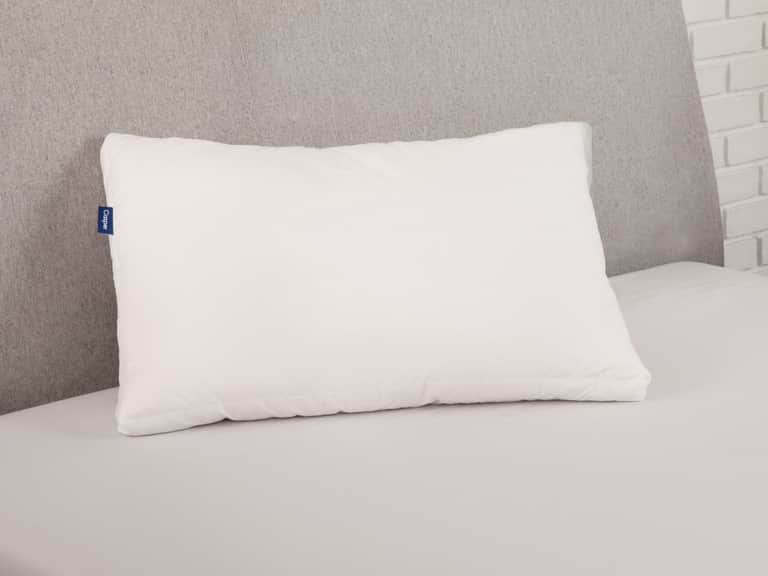
A low-profile Down Pillow provides one example of a deliberately softer, lower-feeling option. Its description notes ethically sourced down, a five-chamber design intended to help the pillow keep its shape, and a low profile. That combination illustrates why loft and feel should be considered together: the design aims to maintain shape while still offering a soft, fluffy surface. Whether that balance suits you depends on your position, mattress, and preference for a pillow that yields.
Adjustability can make the process less final. The Sleep and Beyond myDual Side Pillow is filled with Shropshire wool puffs that can be added or removed to change its support. Its shape can also be bent and positioned. This kind of design offers a practical way to experiment with loft and form, particularly for someone who does not yet know whether a fixed-height pillow will feel right. Its product description also notes that its shape may work around some CPAP setups, depending on the machine; it is not a treatment for sleep apnea.
A simple way to assess your pillow
Shopping for pillow support can feel abstract until you turn the decision into a small, repeatable test. If you are at home, assess your current pillow before replacing it. If you are trying a new one, give it enough time beneath your head to settle; a passing touch tells you little about overnight comfort.
- Start in your usual position. Lie as you normally would, rather than changing posture to suit the pillow.
- Notice the pillow under pressure. Does it flatten quickly, hold its shape, or allow your head to sink into the fill?
- Check the feeling of your neck and shoulders. Look for comfort rather than a forced, rigid position. Pay attention to whether you feel pushed upward, unsupported, or tempted to fold the pillow repeatedly.
- Try a few minutes of stillness. Frequent readjustment can be a clue that the height, firmness, shape, or texture is not working for you.
- Repeat on your usual mattress. The mattress changes how far your shoulder or body sinks, so a pillow tested on a different surface may feel different at home.
- Reassess after several nights. A new fill or shape can feel unfamiliar at first. Give yourself a fair chance to evaluate it, while respecting persistent discomfort or poor sleep.
If you wake with a pillow folded beneath you, pushed aside, or stacked on top of another, treat that habit as useful information. You may be seeking more height, less height, a firmer surface, or a way to adjust the fill. It does not automatically identify the solution, but it can help you describe what your current pillow is not providing.
The small details that shape support
Mattress firmness: A mattress that lets the shoulder sink can change the amount of pillow loft needed for side sleeping. When comparing pillows, think about the surface you use most often rather than an abstract, one-size-fits-all recommendation.
Movement during sleep: Some sleepers remain in one position; others turn from side to back. A pillow with adjustable fill or a versatile shape can make sense when your position changes. A highly sculpted pillow may feel excellent in one posture and less convenient in another.
Shape retention: A pillow that loses height during the night can feel different at bedtime and at dawn. Chamber construction, fill type, and care all contribute to how a pillow performs. Regular fluffing may restore the feel of some down pillows, while an adjustable design may need occasional rearranging.
Care and maintenance: Pillow care varies by material. Check the manufacturer’s instructions before washing or drying a pillow, especially one with natural fill or specialized construction. A breathable pillowcase or protector can help keep a pillow clean, but it does not replace the need to follow the care guidance for the fill itself.
Personal comfort: Recommendations based on sleep position are useful starting points, not rules. Some side sleepers prefer a softer pillow; some back sleepers enjoy a higher profile. The most helpful comparison is how the pillow feels to you over time, used in your ordinary sleep environment.
Common pillow-loft mistakes
- Choosing by appearance alone. A tall pillow can compress dramatically, while a lower one may feel quite firm. Look beyond the untouched shape.
- Assuming firmer always means more supportive. Support is about how a pillow works for your body and sleep position, not simply how resistant it feels to a hand press.
- Ignoring your mattress. A pillow does not operate independently of the surface beneath you. Shoulder sink and mattress feel can change the space the pillow needs to fill.
- Buying only by sleep-position label. “For side sleepers” or “for back sleepers” can narrow the field, but the words cannot account for every body shape, mattress, or preference.
- Expecting one pillow to suit everyone. Shared rooms and guest beds may call for versatile or adjustable options, but individual comfort still varies.
A more considered choice
Finding the right pillow loft is an exercise in observation, not guesswork dressed up as certainty. Begin with the position in which you spend the most time. Consider the gap between your head and the mattress, the way your existing pillow compresses, and whether you prefer a soft, yielding surface or a more stable one. Then look at fill, shape, and construction to understand how the pillow is likely to behave when you lie down.
Low, medium, and high profiles are useful vocabulary, but the real question is what happens beneath your head. A chambered down pillow may pair a soft feel with a low profile; an adjustable wool design may let you remove fill; a shaped side-sleeper pillow may offer a more deliberate contour. Each represents a different approach to pillow support, and none can be declared ideal for every sleeper.
In the end, a well-chosen pillow should feel like a quiet piece of design: present enough to support you, unobtrusive enough to forget. Give attention to the way it compresses, how it fits your sleeping position, and whether you can settle without repeatedly rearranging it. That considered balance—not a number on a label—is the most useful measure of loft.
If you experience persistent neck pain, numbness, or disrupted sleep, consider discussing your symptoms with a qualified health professional. Pillow selection can affect comfort, but it is not a substitute for medical advice or treatment.