Dorm Living 101 · Bedding
Wool or Down? Comparing Dorm Comforter Options for Changing Room Temperatures
A dorm room can feel chilly at bedtime, stuffy by morning, and entirely different once the heating or air-conditioning starts. Choosing a comforter is less about finding the warmest option and more about finding the right balance of insulation, weight, care, and adaptability. Wool and down offer two distinct approaches to that balance.
From the naturally moisture-managing fill of Sleep and Beyond’s wool comforters to the airy loft of a down duvet, here’s how to think through the difference for a changing campus climate.
The dorm-room temperature puzzle
In a house, it may be possible to adjust the thermostat, open a window, or change rooms when the temperature feels wrong. In student housing, control can be more limited. Building systems may follow a set schedule, radiators may run warmer than expected, and a small room can hold heat differently from one floor to another. Add changing weather, a roommate’s preferences, and the warmth of electronics or afternoon sun, and the bed becomes a little climate of its own.
That is why a dorm comforter should be judged on more than its warmth rating. Consider how easily it can be layered, whether the fill feels weighty or airy, how it handles moisture, and what its care instructions ask of you. A beautiful bed is a pleasure; a bed that is comfortable through an unpredictable week is a more useful luxury.
Wool and down are both insulating natural fills, but they do not feel interchangeable. Wool tends to offer a more composed, gently substantial cover and is often chosen for its moisture-managing qualities. Down is known for its light, lofty feel and its ability to trap warmth without the same sense of density. Either can work in a dorm. The best choice depends on the room, the sleeper, and the practicalities of campus life.
Wool: warmth with a steadier feel
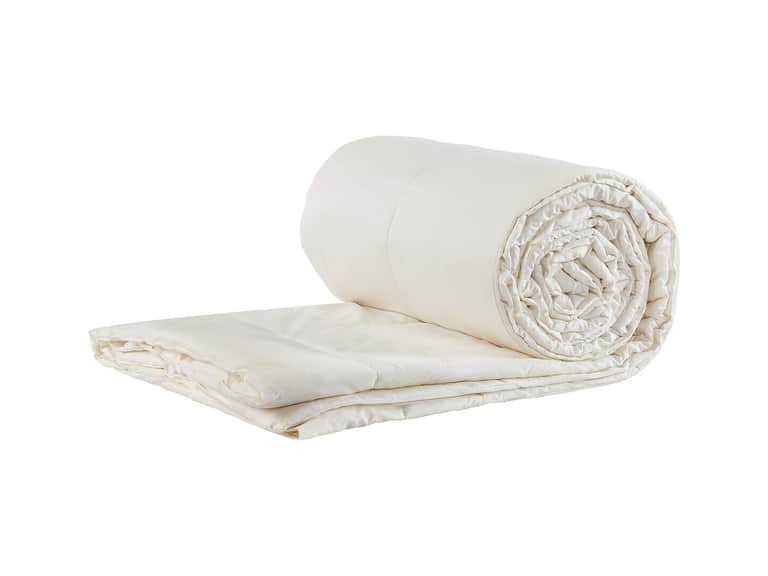
The Sleep and Beyond myComforter is filled with washable wool and encased in cotton sateen. Its fill is described as 13 ounces per square yard, giving it a substantial, even character without making it simply a heavy winter layer. Wool is valued for holding warmth while helping to move moisture away from the body, a combination that can feel useful when a room’s temperature fluctuates overnight.
That balance is not a promise that every sleeper will feel the same. Personal temperature, sleepwear, mattress materials, and room conditions all influence comfort. But if you tend to wake warm beneath a very insulating comforter, wool’s moisture-handling reputation may be worth considering. It can feel less like being wrapped in a sealed cocoon and more like having a consistent layer across the bed.
Wool is also naturally resistant to dust mites, according to the product information. For students who are attentive to bedding materials or who prefer natural fibers, that may be a meaningful consideration. It does not replace regular washing of sheets and pillowcases, nor does it guarantee that a particular item will suit every allergy or sensitivity. When allergies or respiratory concerns are involved, check the full materials and care details and consult a qualified health professional as needed.
For warmer rooms or students who prefer only a touch of insulation, the Sleep and Beyond myComforter Light offers a lighter-weight wool option. Its fill is listed at 5 ounces per square yard, compared with 13 ounces per square yard for the standard myComforter. That difference makes the Light a potentially useful starting point for mild climates, warm sleepers, or rooms that tend to run hot. The lighter option still needs to be considered alongside the bedding underneath it: sheets, pajamas, and a mattress protector can all change how warm the bed feels.
Down: airy loft and adaptable warmth
Down is prized for its lofty, cloudlike character. Its clusters trap air, providing insulation while keeping the duvet relatively light in feel. For someone who wants a soft, enveloping bed without a pronounced sense of weight, a down duvet may be appealing. It can also work well as part of a flexible bedding system: use a duvet cover, add a blanket on colder nights, or fold the duvet back when the room warms up.
The Casper Down Duvet provides a concrete example. It has an ethically sourced down fill, a 100% cotton shell, and sewn-in chambers intended to keep the fill distributed. Eight loops help attach the duvet to a compatible cover, reducing shifting and bunching. Those details matter in a dorm, where a duvet that stays aligned can make the bed easier to remake and help warmth remain more even across the surface.
Down’s loft can offer impressive warmth for its perceived weight, but “light” does not necessarily mean “cool.” A lofty duvet may still feel too insulating to a warm sleeper in a heated room. Before choosing, think about the room at night and in the early morning—not only the coldest day of the year. If your residence hall is known for inconsistent heating, a lighter duvet or a layering approach may be more versatile than choosing the warmest fill available.
Down also calls for attention to sourcing and upkeep. The Casper duvet is described as ethically sourced, but shoppers should review the current product information and any relevant standards themselves if sourcing is an important part of the decision. In care terms, follow the manufacturer’s label: down-filled bedding can require specific washing and thorough drying so the fill does not remain damp or clump. A duvet cover is a practical first line of protection against everyday soil.
At a glance: wool comforter or down duvet?
| Consideration | Wool comforter | Down duvet |
|---|---|---|
| Typical feel | Even, gently substantial, and less cloudlike | Lofty, soft, and airy in feel |
| Temperature comfort | Often selected for warmth with moisture management | Insulates efficiently; warmth depends on loft and construction |
| Useful feature | Available in standard and lighter-fill versions | Chamber construction and cover loops can help limit shifting |
| Care approach | Use a cover; wash gently and infrequently according to instructions | Use a cover and follow the care label for washing and complete drying |
| May suit | Sleepers who like an even layer and are interested in wool’s moisture-handling properties | Sleepers who prefer a lofty, light-feeling duvet with adaptable layers |
These are general material characteristics, not guarantees. Construction, fill amount, room conditions, and individual preferences affect how any comforter feels.
What changes when the room changes?
When the room is cold, both materials can provide insulation, but the experience may differ. Wool’s more even, settled feel may appeal if you like bedding that stays close to the bed. Down’s loft can feel especially inviting when you want a soft, lofty layer. If the building is drafty, a comforter alone may not solve the problem; thermal curtains, a safe draft-management solution approved by housing staff, and suitable sleepwear may make a more noticeable difference.
When the room is warm, the instinct may be to look for a “cooling” comforter. It is more useful to consider the whole sleep setup. A lighter fill, breathable sheets, and a duvet cover that is easy to remove can help you adjust without replacing the comforter. Sleep and Beyond’s lighter wool option is one example of a lower-fill choice; for a down duvet, check the product’s fill and warmth guidance rather than assuming all down bedding behaves alike.
Humidity can influence comfort too. Wool is often selected for its ability to manage moisture, while down’s airy structure is valued for insulation. Neither material can compensate for a poorly ventilated room or a persistently damp environment. If your room is humid, follow campus guidance about ventilation and never dry bedding in a way that conflicts with residence rules.
For a student whose room changes dramatically with the season, flexibility may be more valuable than a single all-purpose layer. A comforter paired with a washable cover and a separate light blanket can be adjusted in small increments. It is easier to remove a layer than to sleep comfortably under a fill that is consistently too warm.
Weight, loft, and the feel of the bed
Comforter weight is personal. Some sleepers find a little weight reassuring; others want bedding that seems to float above them. Wool usually has a more grounded feel than down, while down’s loft can create a plush, airy silhouette. Neither is inherently better for sleep. The useful question is whether you like to feel the cover resting on you or prefer a lighter drape.
Loft also affects how the bed looks. Down can create a fuller, more cloudlike profile, especially when shaken and allowed to regain its shape. Wool tends to lie in a more uniform manner. In a compact dorm room, a tidy bed can double as a sofa or study perch during the day, so consider whether you want bedding that folds neatly, compresses easily for storage, or keeps a decorative shape.
Think about storage before move-in. A bulky comforter may occupy precious closet or under-bed space when it is not in use. A breathable storage bag can help keep bedding protected between terms, but bedding should be clean and fully dry before it is stored. Avoid sealing damp textiles away, and follow the manufacturer’s instructions for long-term storage.
Care in a shared-laundry reality
Care instructions can decide whether a comforter is practical for student life. A duvet cover is especially useful in a dorm because it can be washed more easily than a bulky insert and helps shield the fill from spills, skin oils, and everyday dust. The Sleep and Beyond organic cotton sateen duvet cover set is one cover option listed for dorm bedding; check its size against the insert before buying.
For the standard Sleep and Beyond myComforter, the care guidance recommends regular airing and sunning, spot cleaning when appropriate, and avoiding frequent washing. If a full wash is needed, the instructions specify a cool or warm wool or delicate cycle without agitation, an approved wool detergent, and no spin cycle. Air drying or low-heat tumble drying is advised, and the comforter should not be bleached or ironed. Always check the current label first, as product-specific instructions take priority.
Down also benefits from a protective cover, but its washing routine depends on the specific product. The Casper Down Duvet’s sewn chambers and cover loops help with fill placement; they do not eliminate the need to follow its care label. If a care label calls for a large-capacity machine or specialized handling, factor in the cost and availability of laundry facilities. An insert that is difficult to clean may be less convenient in a residence hall than it seems at first.
Shared laundry rooms add practical considerations: machines may be small, schedules busy, and drying time limited. Check the comforter’s dimensions and care needs before move-in. If the item cannot be cleaned safely in the machines available to you, plan for a professional laundry service or choose a setup that relies on a washable duvet cover and less frequent insert cleaning.
How to choose for your sleep preferences
Use a short, honest checklist. Start with how you sleep now: Do you wake up overheated, or do you reach for extra blankets? Do you prefer a plush, lofty bed or a smoother, more contained layer? Then consider the room: Is it well heated, drafty, humid, or exposed to strong afternoon sun? Finally, consider the routine: Can you wash a large comforter, and do you want to manage a removable duvet cover?
- Choose wool as a possibility if you like an even, substantial feel and want to explore a natural fill associated with moisture management. Compare standard and lighter-fill versions against the temperature of your room.
- Explore down if you prefer airy loft and a light-feeling layer. Check the fill details, sourcing information, cover attachment points, and care requirements of the particular duvet.
- Choose a lighter layer if your residence hall tends to run warm or you are a warm sleeper. You can add a blanket on colder nights rather than committing to heavy insulation.
- Prioritize easy protection if laundry access is limited. A removable duvet cover can simplify routine cleaning and help protect the insert.
- Measure before buying by checking the mattress and bed dimensions supplied by your residence. Twin, Twin XL, and other dorm-bed sizes are not interchangeable.
A considered dorm setup, not a perfect one
The most successful bedding setup is rarely the most elaborate. Begin with a fitted sheet that suits the mattress depth, a pillow that feels comfortable, and one main cover suited to the room’s usual temperature. Add a duvet cover or washable top layer for protection. Keep one light blanket nearby if the building tends to cool down overnight, and store seasonal bedding only after it is clean and completely dry.
For those weighing wool against down, the decision is ultimately a choice between different kinds of comfort. Wool offers a more even, settled sensation and a lighter-fill alternative is available for warmer conditions. Down brings a lofty, buoyant feel, with construction features on the Casper duvet designed to keep the fill in place. Both can be beautiful, practical parts of a dorm bed when their warmth and care needs suit the person using them.
Before ordering, read the product specifications carefully, confirm the size, and review the care label. Residence hall policies may also affect what can be used or how it can be cleaned. A comforter that looks inviting online becomes a genuinely good choice when it fits the bed, the room, the laundry routine, and the way you like to sleep.
Quick take
For a dorm that swings between warm and cool, start with the fill weight and your own sleep temperature rather than the name of the material alone. Wool may appeal if you want an even layer and are interested in moisture management; down may suit you if you value loft and a lighter-feeling drape. A removable duvet cover, accurate bed measurements, and realistic care planning make either option easier to live with.